Your bike does not need another generic chrome part. It needs a finish that can carry the image, flag, skull, logo, family photo, or original artwork you chose without turning dull, scratched, or faded after a season on the road. A durable motorcycle graphic coating is what separates a statement piece from a temporary decal pretending to be custom.
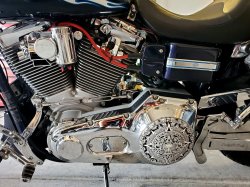
For riders building a Harley-Davidson Big Twin, Twin Cam, Milwaukee-Eight, or Sportster, the small covers on the engine and body are front-and-center real estate. Derby covers, timing covers, inspection covers, horn covers, fuel doors, and console covers catch sun, road grime, fuel vapors, boot scuffs, and plenty of attention at every stoplight. The graphic has to look mean on day one and keep its edge after real miles.
What Makes a Motorcycle Graphic Coating Durable?
Durability is not just about putting an image on metal. It comes down to how the artwork is applied, what protects it, and whether the finished part was built for the location where it will live. An engine-side cover sees more heat and contamination than a framed garage print ever will. That demands a process designed for motorcycles, not a shortcut meant for a laptop skin or water bottle.
A quality hard-coat imaging process places full-coverage, high-resolution artwork directly onto a properly prepared, precision-machined part and protects that image with a hardened finish. The result is a graphic that is part of the component's finished surface, not a loose film sitting on top waiting for an edge to lift.
That distinction matters. Decals can be a quick and cheap way to test an idea, but their edges are vulnerable. Sun exposure can bleach ink. Repeated washing can work moisture underneath. Fuel drips and aggressive cleaners can stain, wrinkle, or weaken the adhesive. A hard-coated decorative cover is built for riders who want the artwork to stay put.
The strongest finishes balance several demands at once: they need to preserve color and fine detail, stand up to heat cycles, resist ordinary road abuse, and retain enough surface integrity that cleaning does not turn into a gamble. No coating is invincible. A deep impact, dropped tool, harsh solvent, or abrasive polishing compound can damage nearly any finish. But a properly hard-coated part gives everyday riding hazards far less chance to steal the look you paid for.
Why the Part Under the Graphic Matters
The coating only performs as well as the surface beneath it. A clean, well-machined cover gives the artwork a stable foundation and gives the finished piece the fitment your engine deserves. That is especially important on Harley platforms, where a cover may look similar across model years but differ in bolt pattern, diameter, clearance, or mounting design.
A killer Gunfighter image on the wrong derby cover is still the wrong part. Before choosing artwork, verify the motorcycle's year, model, engine family, and the specific cover location. Big Twin, Twin Cam, Milwaukee-Eight, and 883/1200 Sportster parts are not interchangeable by attitude alone.
Precision fitment also protects the finish during installation. A cover that seats correctly and uses the appropriate hardware is less likely to be forced, twisted, or scraped into place. Take your time with the install, use the correct tools, and do not drag a metal driver across the face of your new part while chasing a stubborn fastener.
Heat Is Real, but So Is Smart Placement
Engine covers operate in a hot environment, and riders are right to ask whether custom graphics can handle it. A coating made for motorcycle accessories should be selected and applied with that reality in mind. Hard-coat imaging is intended to hold up where ordinary printed products do not belong.
Still, different locations experience different conditions. A derby cover and timing cover live close to the engine. A fuel door may meet occasional gasoline contact. A horn cover sees weather and debris. A console cover may catch keys, rings, gloves, and the things riders set down without thinking. The right process accounts for the role of the part instead of treating every panel like a flat display sign.
If your bike runs unusually hot, has an exhaust issue, leaks fluids, or sees punishing conditions such as gravel roads and frequent winter salt, give it more attention than a weekend cruiser. A durable finish can handle normal use, but maintenance problems should be fixed rather than covered up with better-looking parts.
Durable Motorcycle Graphic Coating vs. Decals and Paint
There is no shame in using decals or custom paint when they fit the job. The trade-off is simple: decals offer speed and low upfront cost, while custom paint can deliver major artistic freedom but often requires more labor, more downtime, and a bigger budget. Both can look outstanding when done well.
For smaller functional parts, hard-coated graphic accessories occupy a different lane. They give riders photo-quality color, detailed artwork, and full-coverage visual impact without committing the entire motorcycle to a permanent paint project. Want a We The People flag on your derby cover now and a dark reaper theme later? Swapping a cover is far easier than repainting a tank.
The other advantage is repeatability. A design can be produced to fit a specific accessory, whether you choose ready-made art or supply your own logo, photo, club mark, business branding, or one-off design. That makes this style of customization accessible to the rider who wants a personal build without sending the bike away for weeks.
At Custom Derby Cover, every piece is made to order, so the design and fitment are not an afterthought. The goal is not to sell the same cookie-cutter part parked outside every dealership. It is to put the image that means something to you on a component built to belong on your motorcycle.
How to Keep Your Custom Finish Looking Hard
A durable coating does not ask for a ceremonial cleaning routine, but a little common sense goes a long way. Wash the part with mild motorcycle soap, water, and a soft microfiber cloth. Rinse grit away before wiping, because road dust can act like sandpaper when rubbed hard across any glossy surface.
Avoid aggressive solvents, harsh degreasers, abrasive pads, and polishing compounds unless the product is specifically safe for finished graphic surfaces. When cleaning an engine area, spray cleaner onto a cloth when practical instead of soaking the cover and every seam around it. If fuel lands on a fuel door or nearby cover, wipe it away promptly rather than letting it sit.
Do not use the face of a decorative cover as a tool shelf. Keys, hardware, and screwdrivers have a way of finding their way onto the most visible surface on the bike. During service work, throw a clean towel over the area or remove the cover if the job calls for it.
Storage matters, too. A garage is ideal, but not every rider has one. If your bike lives outdoors, use a clean, breathable cover and keep it free of trapped grit. Long-term ultraviolet exposure is hard on everything, from seat vinyl to paint to graphics. Reducing unnecessary sun exposure helps preserve color and finish over the years.
Choose Art That Belongs on Your Bike
The best graphic is not always the loudest one. It is the one that feels right when you walk back to your motorcycle in a crowded lot. That might be a patriotic flag, a Day of the Dead image, a dark angel, a unit insignia, a memorial photo, your own artwork, or a logo nobody else can claim.
Think about the colors already on the bike. Blacked-out builds can carry bright, high-contrast art that takes your breath away. A polished or chrome-heavy cruiser may look better with a graphic that has strong outlines and a controlled color palette. If several covers will be customized, choose a shared theme so the bike looks intentional rather than overloaded.
Your motorcycle earns every scratch, every mile, and every story. Put a graphic on it that can take the ride and still tell people exactly who rolled into the lot.