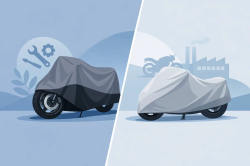
That stock derby cover may fit perfectly, but it says about as much as a factory warning label. For riders building a bike that carries their flag, their colors, their crew, or their own hard-earned story, the choice between aftermarket versus OEM motorcycle covers is not just a parts question. It is a decision about whether your engine cases stay anonymous or become part of the build.
OEM covers have their place. They are designed around the motorcycle from day one, and they are often the easy answer when a damaged factory piece needs to be replaced. But an aftermarket cover can bring a completely different level of visual attitude, material choice, and personalization - as long as you buy for the right platform and know what you are getting.
What OEM Motorcycle Covers Do Well
OEM means original equipment manufacturer. In plain English, it is the cover that came on your Harley-Davidson, Indian, Victory, Suzuki, or other motorcycle, or the factory replacement sold for that same machine. OEM derby, timing, inspection, horn, and console covers are built to meet the manufacturer’s baseline standards for fitment, sealing surfaces, clearance, and production consistency.
The big advantage is predictability. If you order the exact factory part number for your year and model, the bolt pattern, profile, and gasket surface should line up the way the factory intended. That matters most on parts that seal engine oil, such as derby and inspection covers. A cover that looks killer but does not seat flat is not worth a puddle on the shop floor.
OEM is also a sensible route for a restoration-minded owner. If you are bringing a vintage bike back to stock condition, preserving an original look, or replacing a cover after a low-speed tip-over, factory hardware keeps the bike close to its original configuration.
Still, factory parts are typically made for broad appeal. They are designed to look acceptable on thousands of motorcycles, not to make your specific bike impossible to ignore at a light, a rally, or a Saturday morning ride-in. Even upgraded OEM accessory covers often stay within the safe, familiar factory design language.
Aftermarket Versus OEM Motorcycle Covers: The Real Differences
The aftermarket is not one thing. It includes bargain-bin imports, performance-driven billet parts, chrome accessories, hand-finished pieces, and made-to-order covers built around personal artwork. Treating every aftermarket part as equal is how riders end up disappointed.
A quality aftermarket motorcycle cover should be judged on fitment first, then construction, finish, and the maker’s ability to stand behind the product. The best aftermarket options can match the application-specific fit you expect from OEM while giving you choices the factory catalog will never offer.
Fitment Is Non-Negotiable
Harley-Davidson fitment is especially specific. A cover for a Milwaukee-Eight is not automatically right for a Twin Cam. A Sportster 883/1200 cover may not fit a Big Twin application. Even within a family, model year changes, bolt patterns, and cover shapes can matter.
Before ordering, confirm the exact motorcycle year, model, engine platform, and the cover location. Do not rely on a photo that "looks about right." A proper listing should clearly identify whether it fits a Milwaukee-Eight, Twin Cam, Evo Big Twin, or 883/1200 Sportster, along with the relevant model years where applicable.
Also pay attention to what comes in the box. Many decorative covers reuse factory hardware, while others may require new screws, a gasket, or an O-ring. If you are replacing a sealed engine cover, inspect the existing gasket and follow the manufacturer’s torque specifications. Cranking down bolts to cure a leak can warp a cover or damage threads. That is a bad trade for any build.
Materials and Finish Separate the Keepers From the Cheap Stuff
OEM covers are commonly cast aluminum with a factory paint, chrome, or polished finish. They are built for regular use, but their appearance is limited by mass-production processes and conservative styling.
Aftermarket covers can be cast, billet-machined, stamped, powder-coated, plated, painted, engraved, or imaged. None of those words automatically means better. Billet aluminum can offer crisp machining and a premium feel, but a billet cover with poor fitment is still the wrong part. A flashy coating can look great on day one, but it needs to stand up to heat, road grime, fuel splashes, washing, and miles.
For riders chasing full-color artwork, the finish process matters as much as the artwork itself. A decal sitting on top of a cover is not the same thing as a design finished for the environment around a motorcycle engine. High-heat hard-coat imaging is built to give photo-quality art a fighting chance against the heat and abuse that come with real riding. That is why a well-made custom derby cover can do more than decorate the bike. It can keep its bite long after a sticker would have started looking tired.
Personal Style Is Where Aftermarket Wins
This is the part OEM cannot touch. Factory covers may offer a logo, a skull, a bar-and-shield variation, or a few finish choices. The aftermarket lets a rider put a Day of the Dead graphic, a reaper, a military tribute, a flag, a club-inspired theme, a business logo, a personal photo, or original artwork directly on the machine.
That freedom can be tasteful or completely unapologetic. Good. Your bike does not need permission to be either.
A custom cover is a small piece with a big visual return. It sits in a place riders notice when they walk around the bike, crouch beside it, or pull up next to you at a stop. It can tie together paint, grips, foot controls, a seat, and a tank graphic without forcing you into a full custom paint job.
Custom Derby Cover makes that kind of statement possible with made-to-order, precision-machined covers carrying full-coverage, high-resolution artwork. For the rider who has a logo, photograph, or image that belongs on the bike, that is a different lane than choosing from whatever happens to be on a dealership shelf.
Price: Do Not Compare the Wrong Things
An OEM replacement cover can be a practical purchase, particularly when you need one factory-looking part fast. But OEM pricing is not always cheap, especially for branded accessory pieces. You are paying for factory supply chains, official packaging, and the confidence of a known replacement part.
Aftermarket pricing has a wider spread. The lowest-cost covers may sacrifice machining quality, finish durability, or fitment clarity. Premium custom work costs more than a blank mass-produced cover because it involves production time, artwork preparation, and application-specific manufacturing.
The smarter comparison is not simply OEM price versus aftermarket price. Compare the complete value: Does it fit your exact motorcycle? Does it seal correctly? Will the finish hold up? Does it make the bike look like yours? A cover that costs a little more but makes you grin every time you walk into the garage is not a throwaway purchase.
When OEM Is the Better Call
Choose OEM when you need a guaranteed stock replacement, want to preserve original condition, are dealing with a warranty-sensitive repair, or simply prefer the factory look. There is no shame in that. A clean stock bike can be a beautiful bike.
OEM also makes sense when the part is deeply integrated into a complex system and the consequences of poor fit are high. Decorative external covers are an easy place to personalize. Critical internal components and safety systems deserve a more cautious approach.
When an Aftermarket Cover Is Worth It
Go aftermarket when the stock cover feels like dead space on an otherwise personal machine. It is the stronger choice when defined fitment, durable construction, and a finish with real personality matter to you more than keeping the bike exactly as it left the factory.
For a rider with a late-model Harley build, a customized derby or timing cover can be one of the fastest ways to set the ride off. It takes far less commitment than repainting tins, yet it changes the whole side profile of the engine. Just make sure the manufacturer names your platform, stands behind the process, and provides clear installation guidance.
The right cover is not the one everybody else buys. It is the one that fits clean, holds its finish, and makes your motorcycle look more like it belongs to you every time the kickstand goes down.