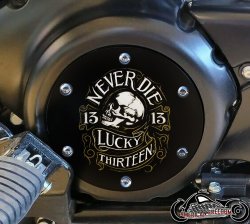
A Suzuki Boulevard has plenty of factory presence, but the stock covers are usually the quietest parts on the bike. That is where Suzuki Boulevard custom covers earn their place. A hard-hitting derby cover, timing cover, inspection cover, or fuel-door accent can turn an overlooked piece of metal into the detail everybody notices at the light, the gas station, or bike night.
This is not about bolting on random chrome and calling it custom. It is about putting your mark on the machine with artwork that fits the attitude of your ride. A skull that means something. A flag that says where you stand. A military emblem, club-style graphic, personal photo, business logo, or artwork nobody else can roll up with.
Why Small Covers Make a Big Difference
Your Boulevard's engine is the center of the motorcycle. It is where the eye naturally lands, especially once the bike is parked. Factory covers do their job, but they rarely say much. A custom cover changes that without requiring a full teardown, paint job, or a garage full of specialty tools.
The right graphic gives the bike a focal point. Dark Angel Reaper-style art can sharpen up a blacked-out M50. A bold We The People flag design can bring patriotic muscle to a C50 cruiser. Day of the Dead artwork, flames, pinup imagery, a Punisher-inspired skull, or a clean black-and-white personal logo can carry the same visual weight as much larger modifications.
That is the appeal: a relatively compact part can set the whole ride off. It also gives you room to customize in stages. Start with one cover, then build the rest of the bike around the colors, theme, and attitude of that piece.
Choosing Suzuki Boulevard Custom Covers With Confidence
First rule: do not buy artwork before you confirm fitment. “Suzuki Boulevard” covers several platforms and model years, and parts that look close in a product photo can have different bolt patterns, diameters, depths, or clearance requirements. C50, M50, C90, S40, and Boulevard-branded variants are not one-size-fits-all machines.
Before ordering, identify the exact year, model, engine size, and the specific cover you are replacing or dressing up. If you are looking at an engine cover, compare the mounting-hole count and placement, cover shape, and any clearance around the clutch, brake pedal, floorboard, or exhaust. For a fuel door or console piece, confirm the tank and console configuration rather than assuming that a Boulevard badge guarantees a match.
A made-to-order custom part is built around your selections, which is why getting the details right up front matters. Measure twice, verify the application, and send clear information if you need help identifying the part. The payoff is a cover that looks like it belongs on the bike, not an accessory forced into place.
Replacement Cover or Decorative Accent?
This choice affects both the look and the job at hand. A replacement cover takes the place of an existing component, so it must match the original mounting and sealing requirements exactly. Installation may involve a gasket, torque specifications, and careful cleaning of the mating surface. Never overtighten fasteners just because a custom piece looks too good to damage.
A decorative accent may mount over or around an existing feature and can be a simpler install, depending on the part. It is still worth checking clearance. Vibration, heat, moving controls, and road grime do not care how good a graphic looks on the workbench.
If you are not comfortable opening an engine-side cover, have a qualified motorcycle technician install it. The visual upgrade should not come with an oil leak or stripped threads.
Pick Art That Belongs on Your Ride
The strongest custom builds have a point of view. You do not need to match every part perfectly, but the design should feel intentional. Think about the dominant colors already on the bike: paint, seat stitching, wheels, exhaust finish, grips, and lighting. Then decide whether the cover should blend in or hit like a punch to the chest.
For a blacked-out Boulevard, high-contrast art creates drama. White skull art, red accents, metallic-looking graphics, or an American flag treatment can stand out hard against black paint and dark engine components. If the bike already carries a bright tank color, a black, charcoal, or monochrome cover may keep the build from getting too busy.
Personal artwork is where cookie-cutter parts get left behind. A high-quality family photo, unit insignia, shop logo, pet image, memorial design, or original illustration can become a functional motorcycle part instead of another decal stuck to the side of the bike. Use the best source file you have. Clear, high-resolution images reproduce with stronger detail than a tiny screenshot pulled from social media.
Be realistic about the canvas size, though. Fine lettering, crowded collages, and tiny details can get lost on a small round cover. Big graphics, clean contrast, and one clear subject usually hit harder from a few feet away. A cover is not a billboard. Make every inch count.
Durability Is More Than a Glossy Finish
A motorcycle cover lives a rough life. It sees heat cycles, vibration, rain, wash water, bugs, fuel splashes, road grit, and whatever gets kicked up by the tire ahead of you. A graphic that looks great when it arrives but fades, peels, or clouds after a season is not a custom upgrade. It is a disappointment with mounting screws.
That is why the production method matters. At Custom Derby Cover, high-resolution artwork is applied through a high-heat hard-coat imaging process to precision-machined parts. The goal is full-coverage color and photo-quality detail with a finish built to stay sharp for the life of the motorcycle.
That finish is different from simply applying a vinyl decal to a generic cover. Decals have their place for temporary looks, but edges can lift and printed surfaces can take a beating around heat, cleaners, and weather. A hard-coated custom cover is for riders who want the artwork to be part of the motorcycle's identity, not a seasonal experiment.
Care is still straightforward. Wash the part with mild soap and water, rinse off grime before it turns abrasive, and use a clean microfiber towel. Avoid harsh solvents, aggressive polishing compounds, and rough shop rags. If you spill fuel on the area, wipe it away promptly rather than letting it sit.
Build a Theme, Not a Parts Pile
One custom cover can lead the entire build. If you choose an Old Glory design, carry a small amount of red, white, and blue into your tank badges, saddlebag trim, stitching, or helmet. If you go with a dark reaper graphic, lean into black hardware, smoked lenses, and a low, aggressive stance. The details do not need to be identical. They need to feel like they came from the same rider.
There is a trade-off between a loud graphic and a timeless build. A bold statement piece gets attention immediately, while a restrained design may age better as you change other components later. Neither choice is wrong. It depends on whether you want your Boulevard to whisper or make itself known before the engine fires.
Also consider where the bike spends its time. A show-oriented cruiser can carry more visual firepower. A daily rider that sees rain, long highway miles, and frequent cleaning may benefit from a design that still looks sharp when dust and road miles are part of the picture. Strong contrast and a readable main image tend to work in both cases.
Make the Order Details Count
Custom work rewards clear decisions. Have your motorcycle information ready, choose the exact part style, and make sure your image or design is the version you actually want produced. Check spelling on names, unit numbers, dates, and slogans before approving anything. A custom-made cover is personal by nature, and personalized parts are typically final-sale once production begins.
Do not rush the design just because the install is easy. Put the same thought into the cover that you put into choosing handlebars, pipes, or a seat. That small piece of machined metal can tell the story of the rider, the road, and the machine in one glance.
Your Boulevard was never meant to disappear into a row of stock cruisers. Pick the image that means something, confirm the fitment, and let the engine side of your bike say it with its whole chest.