A stock derby cover does its job, but it does not say much. An Indian motorcycle custom derby cover turns a small, highly visible engine detail into a personal calling card. Whether your ride carries a battle-worn skull, Old Glory, a military tribute, a clean personal logo, or a photo that means something only to you, the right cover gives your Indian a look no dealership shelf can duplicate.
That is the point of custom work. Your bike should not look like the next bike in the parking lot. It should look like yours.
Why an Indian Motorcycle Custom Derby Cover Gets Noticed
The derby cover sits low on the primary, but it is not hidden. On a clean Indian build, riders notice the engine cases, the paint, the wheels, and the details that tie the whole machine together. A plain factory cover can disappear into the background. A full-coverage custom graphic gives the primary side a deliberate finish.
It is also one of the smartest places to make a visual change. You can alter the attitude of the bike without committing to a complete repaint, a new set of tins, or a major mechanical project. A derby cover lets you bring in color, attitude, and personal meaning while keeping the rest of the build intact.
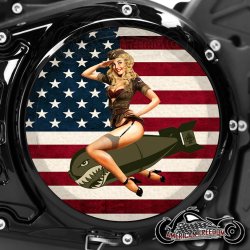
For some riders, that means a dark reaper graphic that matches blacked-out controls and exhaust. For others, it is a patriotic flag treatment that backs up the way they live. A club logo, a unit insignia, a memorial image, or artwork from your own collection can make the part hit even harder. The cover may be compact, but it is never just a filler piece when the image is right.
Start With Fitment, Not Just Artwork
A killer design on the wrong part is still the wrong part. Indian motorcycles have different engine and primary configurations across model families and model years, so fitment needs to be confirmed before the order is made. Do not assume that two covers look interchangeable because they share a similar bolt pattern in a photo.
Check your motorcycle’s year, model, engine platform, and the existing cover’s mounting layout. If you have changed the primary, run an aftermarket setup, or own a bike with model-specific trim, inspect the part already on the motorcycle before selecting a replacement. This is especially important if the bike has been customized by a previous owner.
A properly made cover should be precision-machined for its stated application, with the correct mounting points and profile for the intended engine case. That saves you from forcing hardware, fighting alignment, or discovering the problem after the cover arrives. Style gets the attention, but fitment is what makes the part belong on the bike.
Know What You Are Replacing
The derby cover is not the same as a timing cover, inspection cover, horn cover, or fuel door. Each part has its own shape, mounting method, and visual role. If your goal is to build a coordinated theme, matching the derby cover with other custom accessories can create a hard-edged, finished look. If you only want one statement piece, the derby cover is a strong place to start.
Keep the project focused. A loud graphic can be exactly right on a mostly black bike, while a bike already covered in bright paint and chrome may call for a cleaner, more selective design. Custom does not always mean adding more. It means choosing what belongs.
Choose Artwork That Still Hits After 10,000 Miles
The best custom derby covers are built around an image you will still be proud to see every time you put the kickstand down. Trendy artwork can be fun, but personal graphics usually carry more weight over time. That could be a family crest, a favorite pinup style, a faith-based design, a unit patch, a business logo, or a photograph with real history behind it.
Strong contrast matters. Dark skull art, bright red-white-and-blue graphics, weathered metal textures, flames, and high-definition portraits can all work, but the image needs enough separation to read on a round metal surface. Tiny text, crowded scenes, and low-resolution photos tend to lose their punch once scaled down.
If you are providing your own image, begin with the best file you can get. A sharp original photo or high-resolution design gives the finished part more detail and cleaner edges. Screenshots, heavily compressed social media images, and blurry photos may look acceptable on a phone but reveal their limits when turned into permanent motorcycle art.
Think about the view from three feet away, not only the view from your screen. The artwork should make a statement at a fuel stop, in a bike-night lineup, or under the sun in a parking lot. If it only works when someone leans close enough to inspect it, it may be too busy for the job.
Durability Is Part of the Custom Job
Motorcycle parts live a harder life than wall art. They see heat, vibration, road grime, cleaning products, rain, UV exposure, boots, and the occasional careless wrench. A custom cover needs more than a design printed on the surface and hoped for the best.
A high-heat hard-coat imaging process gives full-color artwork a durable, photo-quality finish designed to hold its ground for the life of the motorcycle. That matters when your cover is carrying something personal. You do not want your image fading out, peeling at the edge, or looking tired after one hard riding season.
There is still a real-world trade-off: no decorative finish is immune to physical abuse. Dragging tools across the cover, using aggressive chemicals, or striking it against debris can damage any finished part. Treat it like the custom component it is. Wash it with motorcycle-safe products, use a soft cloth, and take care during service work around the primary.
Made to Order Beats Cookie-Cutter Every Time
A made-to-order cover gives you more control than pulling a generic accessory from a bin. You choose the image, the part application, and the direction of the build. That could mean selecting a ready-made graphic with serious attitude or going all the way with your own logo, photo, artwork, or branded design.
Custom Derby Cover builds that choice into the process, pairing precision-machined components with vivid hard-coat artwork made for riders who are done with cookie-cutter parts. The goal is not to make every Indian look the same with a different sticker. It is to put a real piece of your identity on the machine.
Made-to-order production also means you should take the selection process seriously. Confirm fitment before purchase. Review spelling on text-based designs. Use the highest-quality source file available. Decide whether you want the artwork to blend with the bike’s existing colors or punch against them. A few extra minutes before ordering can prevent the only kind of custom mistake nobody wants to show off.
Installation Should Be Clean and Controlled
Installing a derby cover is a straightforward job for many experienced riders, but straightforward is not the same as careless. Work with a clean mating surface, use the appropriate gasket or sealing method for your application, and follow the manufacturer’s torque specifications and tightening sequence. Overtightening fasteners can damage threads, warp a cover, or create sealing problems.
If you are not comfortable opening the primary side of your motorcycle, let a qualified shop handle it. There is no shame in protecting your investment. The finished cover deserves a clean installation with no leaks, stripped hardware, or fingerprints trapped in the final reveal.
Once it is mounted, step back and look at the whole motorcycle. That is when the right artwork earns its keep. The cover should not feel like an accessory you added at the last minute. It should look like it was part of the build from day one.
Pick the image that makes you look back at your Indian after you park it. That is usually the one worth hard-coating onto the bike.