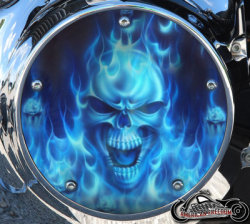
That stock primary cover may be doing its job, but it is not saying much. A Milwaukee Eight derby cover is one of the cleanest ways to put your name, your colors, your crew, or your attitude right where people cannot miss it. It is a small part with a big visual footprint, sitting low and proud on the left side of your Harley.
For riders who are done with cookie-cutter accessories, the derby cover is prime real estate. Run a battle-worn flag, a reaper, a pin-up, a skull, your business logo, a memorial photo, or artwork nobody else on the road can claim. The right cover does more than fill an empty space. It sets your whole ride off.
Why a Milwaukee Eight Derby Cover Gets Noticed
The Milwaukee-Eight platform has a strong, muscular presence straight from the factory. Blacked-out or chrome trim, custom bars, pipes, wheels, and paint all work together to build the stance. Yet the derby cover remains one of those details riders see up close at fuel stops, bike nights, and rallies.
It also sits in a spot that catches the eye naturally. On a parked bike, the primary side is constantly in view. A full-coverage graphic on a precision-machined cover creates a finished look that a small decal or generic medallion cannot match.
That is why a custom derby cover makes sense whether your bike is a stripped-down street bruiser, a long-haul bagger, a show-ready Road Glide, or a personal memorial build. You do not have to tear the motorcycle apart to make it unmistakably yours.
Fitment Comes Before Artwork
A killer design means nothing if the part does not belong on your motorcycle. Milwaukee-Eight engines are found across a range of Harley-Davidson touring, Softail, Trike, and CVO models, but a rider should never assume every cover fits every model just because the engine family name matches.
Start by confirming your model year, model, and primary-cover configuration. The shape, bolt pattern, depth, finish, and application can vary between platforms. A cover intended for one primary setup may not be the correct choice for another, even if both bikes carry Milwaukee-Eight power.
Before placing an order, compare the listed fitment to your bike rather than ordering by appearance alone. If your bike has been modified, pay special attention. An aftermarket primary, a changed clutch setup, or a non-stock conversion can affect what you need. Taking two minutes to verify fitment is a lot better than staring at a beautiful part that cannot go on the bike.
What the Derby Cover Actually Does
The derby cover is not just a decorative plate. It closes an access point on the primary and helps protect the components behind it. That means a quality replacement needs correct machining, a proper sealing surface, and hardware installation that respects the factory service procedure.
The graphic is what grabs attention, but the foundation matters. A cover should look savage while still being built to live on a running motorcycle that sees heat, vibration, weather, road grime, and miles.
Build a Cover Around Your Ride, Not a Catalog Page
There is nothing wrong with a ready-made graphic when it hits the right nerve. A We The People flag can bring the patriotic fire. A Dark Angel Reaper, Gunfighter, FAFO Skull, or Day of the Dead image can give your primary the dark edge your bike has been asking for.
But custom work is where things get personal. Your derby cover can carry a unit insignia, family name, club-style graphic, shop logo, pet photo, memorial image, original tattoo art, or an image you created yourself. It can match your tank paint, saddlebag theme, helmet design, or the colors of a build that has been evolving for years.
The best custom designs usually follow the motorcycle's personality. A loud bagger can handle bold color, detailed imagery, and aggressive contrast. A blacked-out Softail might call for a stark black, gray, and red piece that looks mean without trying too hard. A heritage build may look right with vintage lettering, an old family photograph, or distressed Americana artwork.
Think about what you want the cover to say from six feet away. Fine detail is powerful, but a strong central image, readable lettering, and clean contrast tend to make the biggest impact once the part is mounted. If your design includes text, keep the message direct. A derby cover is not a billboard. It is a signature.
Hard-Coat Finish Is Built for Real Riding
Motorcycles are not display cases. Rain rolls in. Boots kick up grime. Heat builds in traffic. Road dust gets everywhere. A custom part needs more than an image printed on its surface and a promise that it will hold up.
Custom Derby Cover uses a high-heat hard-coat imaging process to apply full-coverage, photo-quality artwork to precision-machined parts. The goal is simple: put the image into a durable finish made to retain its appearance for the life of the motorcycle, not just until the first serious riding season.
That difference matters when you are choosing between a purpose-built custom cover and a shortcut. A cheap sticker can peel at the edges. A low-grade surface treatment can fade, scratch, or look tired fast. A hard-coated graphic is made for riders who actually put miles on their bikes.
Finish choice still comes down to your overall build. A bright graphic can become the visual centerpiece on a dark primary. A restrained design can tie together paint, powder coat, and chrome without fighting for attention. Neither approach is better. The right one is the one that looks like it belongs on your Harley.
Installation: Do It Clean, Do It Right
Swapping a derby cover is within reach for many hands-on riders, but it is not the place for guesswork. Work on a cool motorcycle, use the correct tools, and follow the service instructions for your specific Harley model.
Remove the existing fasteners carefully and keep track of their condition. Inspect the gasket or seal before reinstalling anything. If it is worn, damaged, or questionable, replace it. A fresh custom cover deserves a clean sealing surface, not an old gasket that may cause trouble later.
When installing the cover, start all fasteners by hand and tighten them evenly in the recommended sequence. Do not crank one screw down hard while the others are loose. Uneven pressure can create sealing problems, and overtightening can damage threads or distort the cover. Use the torque specification for your exact model from the appropriate service information.
Once the job is finished, wipe away fingerprints, step back, and look at the bike from the left side. That is the moment the part stops being an accessory and becomes part of the build.
Keep the Artwork Looking Mean
Routine care is straightforward. Wash the cover with mild soap, water, and a soft microfiber cloth. Avoid abrasive pads, harsh solvents, and aggressive cleaners that are not intended for coated motorcycle surfaces. If you use a detailing product, make sure it is safe for the finish before applying it.
Road grime is easier to remove when you do not let it bake on for weeks. A quick wipe after a wet ride or a dusty weekend helps preserve the sharp look that made you choose the design in the first place. While cleaning, take a second to look over the fasteners and surrounding area for anything that needs attention.
A Milwaukee-Eight derby cover will not make your bike faster, and it does not need to. Its job is to make a statement every time you drop the kickstand. Pick the correct fitment, choose artwork with some fire in it, and give your Harley one detail that belongs to nobody else.