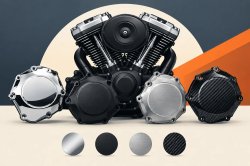
Your derby cover is not just a round piece of metal between your primary and the outside world. It is one of the first places a rider notices when walking up to a Harley, and one of the easiest places to kill the factory look for good. Harley engine cover materials determine more than the cover’s weight or shine. They affect fitment, corrosion resistance, finish durability, serviceability, and whether your custom artwork still looks mean after years of heat, rain, road grit, and parking-lot attention.
For riders building a bike that does not look like every other machine outside the dealership, the material under the graphic matters. A killer Reaper, flag, personal logo, or family photo deserves a cover that is properly machined, made for the job, and built to stay in the fight.
Why Harley Engine Cover Materials Matter
Engine and primary covers live in a hard environment. They are exposed to vibration, repeated heating and cooling, moisture, cleaning chemicals, boots, rocks, and whatever gets thrown off the road. A cover can look perfect on a workbench and still become a disappointment if the base material is thin, poorly cast, incorrectly machined, or finished with a coating that cannot handle real riding.
Material also affects how precisely a cover can be made. Harley platforms have distinct bolt patterns, diameters, depths, and clearance requirements. A derby cover for a Milwaukee-Eight is not automatically right for a Twin Cam, and a Sportster cover is its own animal. Good fitment starts with using a cover blank designed for the motorcycle, not forcing a generic circle onto a specific primary.
There is another practical point: these parts come off for service. A cover should sit flat, accept the correct hardware, and reinstall without drama when it is time to inspect, adjust, or work on the bike. Custom does not mean careless.
Aluminum Is the Standard for a Reason
Most quality Harley engine covers are aluminum, and that is not an accident. Aluminum offers the balance riders need: it is light, corrosion-resistant, machinable, and capable of taking detailed finishes. It also belongs on a Harley because so many factory engine, transmission, and primary components already use aluminum alloys.
The two aluminum terms riders see most often are cast aluminum and billet aluminum. Both can make solid engine covers. The difference is how the part begins and how much control the manufacturer has over its final shape and finish.
Cast Aluminum Covers
Cast aluminum is made by pouring molten alloy into a mold. It is a common manufacturing method for OEM-style parts because it efficiently creates complex shapes at scale. A well-made cast cover can be durable, functional, and a smart choice for riders who want a straightforward replacement or a traditional factory-style look.
The trade-off is consistency. Cast surfaces may require more finishing work, and lower-grade castings can have surface imperfections or less precise details around edges and bolt holes. That does not make every cast cover bad. It means the quality of the casting and the machining afterward matter a lot.
For a decorative cover, cast aluminum can work well when the mating surface is flat, the bolt holes are cleanly finished, and the face is prepared correctly for paint, powder, chrome, or custom imaging. If the blank is rough or uneven, no skull graphic in the world will hide bad workmanship forever.
Billet Aluminum Covers
Billet aluminum starts as a solid block or plate of metal, then gets precision-machined into the finished cover. This process gives the manufacturer tight control over dimensions, edge work, recesses, and the surface that will receive the final finish.
For riders who care about clean lines and a premium custom look, billet is often the move. Machined aluminum can deliver crisp contours and a consistent face that lets high-resolution artwork hit hard. It is especially well suited to a full-coverage hard-coat finish, where the final image needs a stable, properly prepared foundation.
Billet does usually cost more than a basic cast piece. You are paying for material, machining time, and precision. Whether that difference is worth it depends on the build. A daily rider getting a bold visual upgrade may be perfectly served by a quality machined cover blank. A show-focused build or a bike built around personal artwork may justify spending more for the detail and refinement billet can provide.
Steel, Stainless Steel, and Chrome Have Their Place
Steel covers are less common in the Harley engine-cover world, but they show up in certain aftermarket parts and decorative applications. Steel is strong and can support chrome plating well, giving a bike that old-school, mirror-bright look. The downside is weight and corrosion risk if the plating or protective finish gets damaged.
Stainless steel fights corrosion better than plain steel and can be polished to a bright finish. Still, it is generally not the first choice for a full-color custom image. Stainless has its own visual identity: polished, brushed, industrial, and clean. If that is the style of the bike, it can look right. If you want a full-face photograph, a weathered American flag, or a dark graphic that wraps edge to edge, aluminum is usually the more natural canvas.
Chrome itself is a finish, not a base material. That distinction matters. A chrome cover may start as aluminum, steel, or another metal, and the durability of that bright finish depends on the preparation and plating process underneath. Chrome looks incredible when maintained, but it can demand more attention than a hard-coated custom graphic. It also reflects everything around it, including scratches, fingerprints, and a gas-station parking lot at noon.
The Finish Has to Match the Material
A custom cover is only as tough as its finish system. Material preparation determines whether the finish bonds correctly, stays sharp, and resists the punishment that comes with actual miles.
Paint can offer plenty of color options, but conventional paint systems can chip or fade when they are not formulated for heat and abrasion. Powder coating is durable and looks great for solid colors, textures, and certain graphic treatments, though it is not always the best route for photo-quality detail. Polished metal has a timeless look but needs regular care to avoid oxidation and water spotting.
For riders who want detailed artwork rather than a plain black, chrome, or machined surface, a high-heat hard-coat imaging process changes the game. The right process permanently bonds high-resolution imagery to a properly prepared metal part, producing a finish made to hold up around the engine and primary area. That is how a cover can carry a sharp design without turning into a faded decal after a riding season.
At Custom Derby Cover, the goal is not to slap an image onto a generic part and call it custom. The artwork is applied to precision-made, vehicle-specific covers so the finished piece delivers both the visual punch and the fit your bike deserves.
Fitment Beats Guesswork Every Time
The toughest material in the world will not save a cover that does not fit. Before choosing a derby, timing, inspection, or point cover, identify your Harley platform and the exact cover location. Big Twin, Twin Cam, Milwaukee-Eight, and 883/1200 Sportster applications use different cover designs. Even within a model family, year ranges and primary configurations can change what belongs on the bike.
Check the bolt pattern, cover diameter, mounting depth, and whether the application calls for a gasket or O-ring. Be careful with hardware too. Over-tightening bolts can distort an aluminum cover, damage threads, or ruin a clean installation. Follow the factory torque specification for your motorcycle instead of muscling it down because it “feels tight.”
If a cover is replacing a factory piece, inspect the mating surface before installation. Remove old gasket material, clean away grime, and make sure the cover sits flush. A custom part should set your ride off, not create a leak that has you pulling it back off next weekend.
Choosing the Right Material for Your Build
There is no single answer because the right cover depends on what you expect from it. If you want a traditional shine and do not mind upkeep, polished or chrome-finished metal may fit the build. If you want a clean, durable solid-color part, a properly coated aluminum cover is hard to beat. If your goal is full-color art that says exactly who you are, start with a quality aluminum cover engineered for high-detail imaging.
Think about where and how you ride. A garage-kept weekend cruiser sees a different life than a bagger that crosses state lines in rain, heat, dust, and highway debris. Think about the rest of the bike, too. Blacked-out hardware, brushed metal controls, chrome accents, and painted tins all change which material and finish will look intentional rather than thrown together.
Most of all, do not treat the cover like an afterthought. It is a small part with a loud voice. Pick the Harley engine cover material that fits your platform, matches your riding life, and gives your chosen artwork a foundation worthy of the miles ahead.