A derby cover versus timing cover decision is not just about picking the graphic that hits hardest. These parts live in different places, serve different jobs, and use different fitment patterns. Put a killer skull, flag, photo, or personal logo on the wrong cover, and it will not matter how good the artwork looks. It simply will not fit your machine.
For Harley riders building a bike that refuses to blend into the parking lot, both covers are prime real estate. The derby cover gives the left side of the bike a bold, unmistakable focal point. The timing cover adds detail to the engine itself. Know the difference before you order, and you can set your ride off without guessing.
Derby Cover Versus Timing Cover: The Main Difference
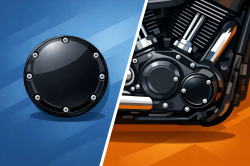
The derby cover is the round cover located on the primary case, usually on the left side of a Harley-Davidson. It covers the clutch assembly access point. On many Big Twin models, it is the larger circular piece riders notice first when they look down the left side of the motorcycle.
A timing cover, often called a timer cover on some Harley applications, is typically a smaller cover mounted on the engine case. Its position, bolt pattern, and exact purpose vary by engine family and year. In the custom-parts world, a timing cover generally refers to the smaller decorative engine cover associated with the ignition timing area - not the large outer cam chest cover that houses major valvetrain components.
That size and location difference changes the visual effect. A derby cover is a full-on statement piece. It can carry a high-impact image with enough space for a detailed reaper, patriotic flag, pinup, military emblem, or a personal photograph. A timing cover is smaller, but it can tie the whole engine package together when it carries matching art, a logo, or a clean graphic element.
What a Derby Cover Does
The primary case holds the components that transfer power from the engine to the transmission. Behind the derby cover is access to the clutch area. That is why the cover must seal correctly and why it is more than a decorative disk.
When riders replace a derby cover, they are usually doing a straightforward external swap. Still, it is a service part. The fasteners should be tightened in the proper sequence and to the torque specification for that exact motorcycle. If the gasket or O-ring is worn, pinched, or reused when it should not be, primary fluid can leak.
The good news is that a derby cover gives you a major visual upgrade without tearing deep into the motor. It is one of the fastest ways to replace a factory-fresh look with something that actually belongs to you. A hard-coated, precision-machined cover turns an otherwise plain section of the primary into a personal billboard built for the road.
Derby cover fitment is not one-size-fits-all
Harley has used different derby-cover diameters, screw counts, and primary configurations across its lineup. A cover for a Twin Cam Touring bike may not fit a Milwaukee-Eight Softail. A Sportster uses its own primary and cover layout. Even when two covers look nearly identical in a product photo, a small change in diameter, bolt spacing, or screw style can stop the install cold.
This is why the model year and engine platform matter as much as the artwork. Big Twin, Twin Cam, Milwaukee-Eight, and 883/1200 Sportster fitments need to be treated as separate applications, not broad guesses.
What a Timing Cover Does
A timing cover is smaller, but it sits in a high-visibility spot on the engine. On applicable Harley models, it covers the timing or ignition-related area and provides a finished look over that section of the case. It is often positioned on the right side of the bike, where it can balance the visual weight of a custom derby cover on the left.
Do not confuse a decorative timing cover with the full cam cover. The cam cover, also called the cam chest cover, is a much larger structural engine component. Removing it can involve gaskets, oil-system considerations, and internal engine work. A decorative timing cover is generally a simpler exterior accessory, but the exact installation process always depends on your engine and model year.
On some motorcycles, riders use the terms timing cover, timer cover, and ignition cover loosely. That is where ordering mistakes happen. The name on a listing matters less than the actual fitment details: make, model, year, engine family, cover diameter, and fastener pattern.
Timing covers demand sharper graphic choices
Because the surface area is smaller, a timing cover rewards bold artwork. A strong center image, a clean badge-style logo, a skull face, a number, or a simplified version of a larger design usually reads better than a crowded scene. Tiny lettering and intricate background details can get lost once the cover is mounted low on an engine and exposed to real-world road grime.
That does not mean a timing cover has to play it safe. It means the design needs to be built for the part. When the artwork is sized correctly and finished with a high-heat hard coat, that small circle can hit like a signature on a custom paint job.
Which Cover Makes the Bigger Visual Impact?
If you are choosing only one, the derby cover usually delivers the biggest instant change. Its larger face gives the artwork room to breathe, and its location on the primary makes it easy to spot. It is the right move for riders who want a personal photo, detailed military artwork, a full-color flag, a dark angel, or anything with layers of visual detail.
A timing cover makes sense when you want to build a coordinated engine package. It is a strong second move after the derby cover, especially if you want repeated themes across the bike. Run the same We The People flag treatment on both, pair a detailed derby image with a simplified logo on the timing cover, or use a matching color palette to connect the two sides of the motorcycle.
Neither choice is automatically better. It depends on whether you want one loud focal point or a more complete, custom-built look from every angle.
Check These Details Before Ordering
Before choosing a derby cover or timing cover, confirm the motorcycle's year, make, model, and engine platform. Then verify the specific cover style, including diameter, number of mounting holes, and whether the product is intended for a Big Twin, Twin Cam, Milwaukee-Eight, or Sportster application.
You should also consider the finish and hardware already on the bike. Blacked-out engines, chrome primary cases, brushed aluminum, and bronze hardware all frame custom artwork differently. A white graphic may explode off a blacked-out build, while a darker image can look meaner against polished metal.
Finally, think about installation before the part arrives. Have the correct tools, inspect the existing gasket or seal, and use the factory service information for torque values. A custom cover deserves a clean install. Do not crank down fasteners just because the part looks tough.
Build a Cover Package That Looks Intentional
The strongest custom bikes do not look like random accessories were thrown at them one checkout at a time. They look intentional. Your derby cover can carry the main image, while the timing cover echoes it. Add complementary inspection, horn, fuel-door, or console art only if it supports the overall style instead of competing for attention.
Custom Derby Cover makes that kind of coordination possible because the image is not limited to whatever the dealership has hanging on a wall. A favorite photograph, unit emblem, business logo, personal design, or graphic that nobody else would dare run can become a functional, made-to-order part.
Start with the cover your bike actually needs, verify the fitment like your ride depends on it, then choose artwork with enough attitude to make the part worth looking at every time you throw a leg over the seat.