A derby cover that looks mean but leaves a bolt hole hanging in space is not custom - it is a headache. If you are asking which covers fit Sportsters, start with one hard truth: “Sportster” is a family name, not a complete fitment answer. Your model year, engine platform, cover location, and bolt pattern all decide what belongs on your bike.
That little bit of homework is what separates a clean, road-ready install from a part that goes back in the box. Get the fitment right first, then set your ride off with artwork that is anything but cookie cutter.
Which Covers Fit Sportsters? Start With the Platform
For cover fitment, most traditional Sportsters fall into the air-cooled Evolution Sportster family. That includes the familiar 883 and 1200 models - Iron 883, Forty-Eight, SuperLow, Custom, Roadster, Nightster, and many others built across several decades. They may share the Sportster name, but the primary-side covers and timing-side covers are not all interchangeable.
The biggest dividing line is usually the model year. Many aftermarket derby covers are grouped as 1994-2003 Sportster 5-hole covers or 2004-later Sportster 6-hole covers. That difference matters immediately. A six-bolt cover cannot properly mount to a five-bolt primary, no matter how good the graphic looks.
Do not assume the newest bike carries the same setup as an older XL. The 2004 redesign changed the Sportster chassis and primary arrangement, and cover fitment followed suit. The safest move is to identify the year and exact model from your registration or VIN information, then compare it to the fitment range listed for the specific cover.
The Sportster S Is a Different Animal
The Sportster S uses the liquid-cooled Revolution Max engine, not the traditional air-cooled 883/1200 Evolution setup. Its engine cases, cover shapes, and mounting points are different. A cover made for a 2004-2022 air-cooled Sportster XL will not fit a Sportster S just because both tanks say Sportster.
The same caution applies to newer Revolution Max-based bikes that may get mentioned in the same conversation as Sportsters. Never shop by nickname alone. Shop by engine platform and part location.
Know the Cover You Are Replacing
“Engine cover” is a loose term riders use for several totally different parts. Before ordering, stand on the left or right side of your bike and identify exactly what you want to change.
Derby covers
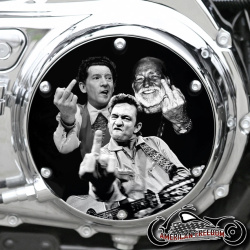
The derby cover is the round cover on the primary case, typically on the left side of a traditional Sportster. It gives access to the clutch area. This is the cover most riders personalize first because it is highly visible when the bike is on the stand or leaned into a parking lot.
For traditional Sportsters, bolt count is your first check. Five-hole and six-hole derby covers are distinct fitment groups. Count the mounting screws on your existing cover, but do not stop there. Compare the shape, diameter, screw placement, and listed year range as well.
Timing covers
The timing cover, often called the cam or nose cone cover depending on the application, sits on the engine’s right side. It is not interchangeable with a derby cover. Timing covers have their own outline, fastener pattern, and year-specific fitment.
This is where a lot of bad orders begin. A rider sees a round custom piece and assumes it will work on either side of the motor. It will not. The primary and timing sides have different jobs, different sealing surfaces, and different mounting geometry.
Inspection covers and primary accessories
Some Sportsters use smaller inspection-style covers or other primary-side pieces that are easy to confuse with derby covers in product photos. These parts may look close in size, yet even a slight mismatch in hole spacing makes them unusable. Order by the named part category, not by what seems visually similar.
Bolt Pattern Is the Gatekeeper
A cover has to do more than sit flat against the case. Every mounting hole must line up cleanly, the cover must clear surrounding parts, and it must use the correct sealing arrangement for that location. For a derby cover, that also means protecting the clutch area from dirt and moisture.
Count the fasteners on the cover currently installed on your bike. Then look at their spacing. Five screws arranged around a circular cover are not the same as six screws, and the same number of screws does not guarantee the same pattern across every Harley engine family.
If a previous owner customized your Sportster, take an extra minute here. Some bikes have aftermarket primary cases, conversion parts, or covers installed from a different year range. Your model year is still the best starting point, but the part physically on the bike tells the final story.
A quick photo of your current cover, taken straight on, can help you verify the bolt layout before you order. Include a shot wide enough to show the surrounding primary or engine case. That is far more useful than a blurry close-up of the artwork.
Year Ranges Matter More Than Trim Names
Trim names change. Harley has used names like Custom, Low, Nightster, Iron, Forty-Eight, Roadster, and SuperLow across different years and configurations. Those names help identify the motorcycle, but they are not a substitute for a fitment range.
When a cover is listed for a particular range, such as 1994-2003 Sportsters or 2004-up air-cooled Sportsters, that range is doing real work. It reflects the primary case design, screw count, and the dimensions machined into the part.
Treat broad labels like “fits Harley Sportster” with caution if no year range, cover location, or bolt count appears beside them. A generic listing may be cheap, but cheap stops looking like a bargain when you are drilling nothing, forcing screws, or paying return shipping for a piece that was never right for your bike.
Do Not Mix Sportster and Big Twin Covers
Sportsters and Big Twins live under the same Harley banner, but their covers are not a universal swap. A Twin Cam, Milwaukee-Eight, Shovelhead, or Evolution Big Twin cover can have a different diameter, bolt pattern, thickness, or case profile than an XL Sportster part.
That is especially true with derby covers. They are often round and often decorated with the same skulls, flags, eagles, pinup art, and military graphics. Similar art does not mean shared fitment. The part must be machined for your engine family.
The same rule applies if you are building a hybrid-style project. Engine swaps and custom primary setups make fitment a case-by-case call. In that situation, identify the engine and primary case actually installed, not the frame or title designation.
A Clean Way to Verify Your Sportster Cover
Before choosing your image, gather four details: your model year, exact model name, engine platform, and the cover type you want to replace. Then confirm the number of mounting bolts on the existing part and compare it with the product’s stated fitment.
If your bike is a traditional air-cooled 883 or 1200, determine whether it falls into the five-hole or six-hole derby-cover family. If you are looking at a timing cover, use the timing-cover fitment only. Do not use derby-cover information as a shortcut.
Also account for modifications. Forward controls usually do not affect the cover itself, but custom exhaust, crash bars, floorboards, or oversized accessories can change how easy it is to access mounting screws. A cover may fit perfectly yet take a little more patience to install on a heavily built bike.
When in doubt, pause before ordering. A couple minutes spent verifying the platform beats turning a made-to-order custom part into an expensive garage decoration.
Fitment First, Then Make It Yours
Once you know your Sportster’s cover style, the fun part starts. This is where a stock-looking side case becomes a personal signature. Run a We The People flag, a hard-edged reaper, a service emblem, a family photo, your club logo, your business mark, or artwork nobody else will have at the next stoplight.
At Custom Derby Cover, the right fitment is paired with precision-machined parts and full-coverage hard-coat imagery built to handle heat, weather, and real miles. The goal is not to bolt on another generic catalog piece. It is to put your stamp on the machine without compromising the basics.
Your Sportster already has a story in it. Verify the bolts, match the platform, and give that story a cover worth showing off every time the kickstand drops.